
Interior doors, though often overlooked, are powerful design elements. They mark transitions between rooms and contribute to the overall character of your home. While white doors have long been the default choice, clean, bright, and neutral, many designers and homeowners are increasingly embracing color as a way to add depth, personality, and cohesion to interior spaces. Today I’m going to share with you some of the pros and cons of painted interior doors as well as some colors we considered for our new build. I’ll also share the one we ultimately selected!
This post contains affiliate links for your shopping convenience. You can read my full disclosure policy here.
When I recently shared on Instagram that I was considering painting the interior doors at our new build a color other than white, there were a lot of opinions! I did a vote to see if people thought I should stick with white or try something different. The results were literally a 50/50 split. There was lots of great feedback for and against trying a different color so I thought I’d share some of that today. Let’s explore the benefits and trade-offs of painting interior doors a color other than white. I’ll also share some examples as well as the details on what we ultimately chose.
Why Consider Color for Interior Doors?
Interior doors are more than functional elements: they’re design opportunities. Painting them a color other than white can transform a space in sophisticated and unexpected ways. We have several areas in our new home where we have hallways with several doors. There aren’t a lot of design or decor opportunities, so painting the door a color other than white can really make those spaces more interesting! Let’s take a look at other pros and cons of doing so.
Pros of Painting Interior Doors a Color Other Than White
1. Adds Visual Interest and Depth
Color creates contrast and can draw the eye. A bold or moody door color becomes an intentional design point rather than background architecture. In minimalist or neutral interiors especially, colored doors introduce subtle drama and dimension.
Example: A hallway lined with charcoal-gray doors feels more intentional and architectural than one with all-white doors.
2. Camouflages Wear and Tear
Mid-tone and darker hues hide scuffs, fingerprints, and everyday wear better than bright white, making them practical in high-traffic areas like hallways, kids’ rooms, or home offices.
3. Integrates with Design Palette
When chosen thoughtfully, door colors can tie into the interior color scheme, matching cabinetry, millwork, or accent walls, and helping the whole home feel cohesive.
4. Great for Style Expression
Colored doors are especially popular in design styles like traditional, modern farmhouse, coastal, transitional, and contemporary interiors. They signal intentionality and elevate the overall design narrative.
Potential Cons of Painting Interior Doors a Color Other Than White
While color has many advantages, there are a few trade-offs to consider.
1. Can Make Small Spaces Feel Smaller
Darker or more saturated hues can visually close in narrow hallways or tight rooms. In compact homes, too many dark doors might make the space feel heavier.
Solution: Reserve dramatic hues for focal doors (like a front door) and balance with lighter walls and trim.
2. Harder to Change Later
This is the big one for me! Unlike white, which harmonizes with almost everything, specific colors can be trickier to coordinate if you redecorate. That said, this applies to any bold design choice, and refreshing paint is always possible.
3. Requires More Thoughtful Coordination
Colored doors need more intentional planning. Selecting paired hardware finishes, matching with wall colors, and ensuring balance with flooring and furnishings, especially from room to room and floor to floor where lighting may vary.
4. Lighting Affects Perception
Paint colors look different under various lighting (natural vs. artificial) and at different times of day. That’s true for all painted surfaces, but dark or vibrant doors can look dramatically different under changing light. This can be especially problematic when you have a variety of lighting situations throughout your home and use the same color on doors throughout.
Tip: Test samples on doors in multiple lighting conditions before committing.
Popular Non-White Interior Door Colors
Here are tried-and-true colors that work beautifully on interior doors — from timeless classics to modern favorites:
Classic Neutrals
- Black / Jet Black – For crisp contrast and dramatic definition.
- Charcoal Gray – A softer, moody classic that anchors neutral interiors.
- Greige – Warm gray with tan undertones — cozy yet sophisticated.
Warm & Earthy Tones
- Deep Navy – Elegant and calming, pairs beautifully with brass hardware.
- Olive Green – Earthy with depth; perfect for nature-inspired palettes.
- Chocolate Brown – Rich and grounding, ideal for rustic or traditional homes.
Soft & Subtle Hues
- Slate Blue – Soft yet notable; works well with white walls.
- Dusty Teal – A muted, sophisticated pop of color without overwhelming.
- Warm Taupe – A gentle alternative to beige that reads modern and warm.
Bold & Modern Statements
- Forest Green – A deep jewel tone that suits eclectic or luxurious interiors.
- Brick Red – A bold choice for accent doors or interior focal points.
- Charcoal Plum – Deep purple-gray that’s stylish but still neutral enough to blend.
Selecting the Right Door Color: Practical Tips
If you’re wanting to try large, pre-painted samples, I’d definitely look into Samplize for picking the perfect blue gray paint color for your home! Their peel and stick samples are made with real paint (not dyed to mimic the color) so it can definitely help narrow down your top picks. I’m a huge fan and use their samples all the time! Following are some additional tips for selecting the right door color.
1. Consider Adjoining Wall Colors
Do you want the door to stand out or blend in? If your walls are light neutral, a mid-tone door color adds subtle contrast. For dramatic effect, go darker than the walls.
2. Think About Hardware
Door color and hardware finish (brass, matte black, nickel) go hand-in-hand. Choose both together to avoid last-minute mismatches. Some paint colors will definitely work better with a particular hardware finish.
3. Test Samples at Different Times
Lighting can change so much throughout the day in your home, and even from room to room! Paint a portion of the door or use large sample cards to observe how the color shifts with natural and artificial light. If possible, it’s also helpful to compare on very sunny days and cloudier or overcast days. I cannot stress enough that you should never look at a color online and just go with it without testing in your specific lighting conditions. We’re only moving a street away and colors look vastly different from home to home!
4. Balance with Overall Palette
If most of your decor is neutral, a colored door can be the singular statement. In colorful interiors, choose a tone that harmonizes rather than competes with existing hues.
Choosing a color other than white for interior doors is more than a trend — it’s a considered design choice that adds personality, depth, and style to your home. Whether you lean toward dramatic darks, soft muted tones, or warm earthy hues, the right door color can elevate the everyday from ordinary to extraordinary.
Examples of Interior Painted Doors
It’s not uncommon to see the back sides of front doors painted on the interior, but it’s less common to see all of the interior doors painted throughout a home. Here are some examples of interior paint doors, in both types of settings. I’ve included the paint color details on those where the information is available.
In our Omaha entryway, I painted the interior side of our front door Benjamin Moore Water’s Edge. It was paired here with Benjamin Moore Simply White on the walls and trim.
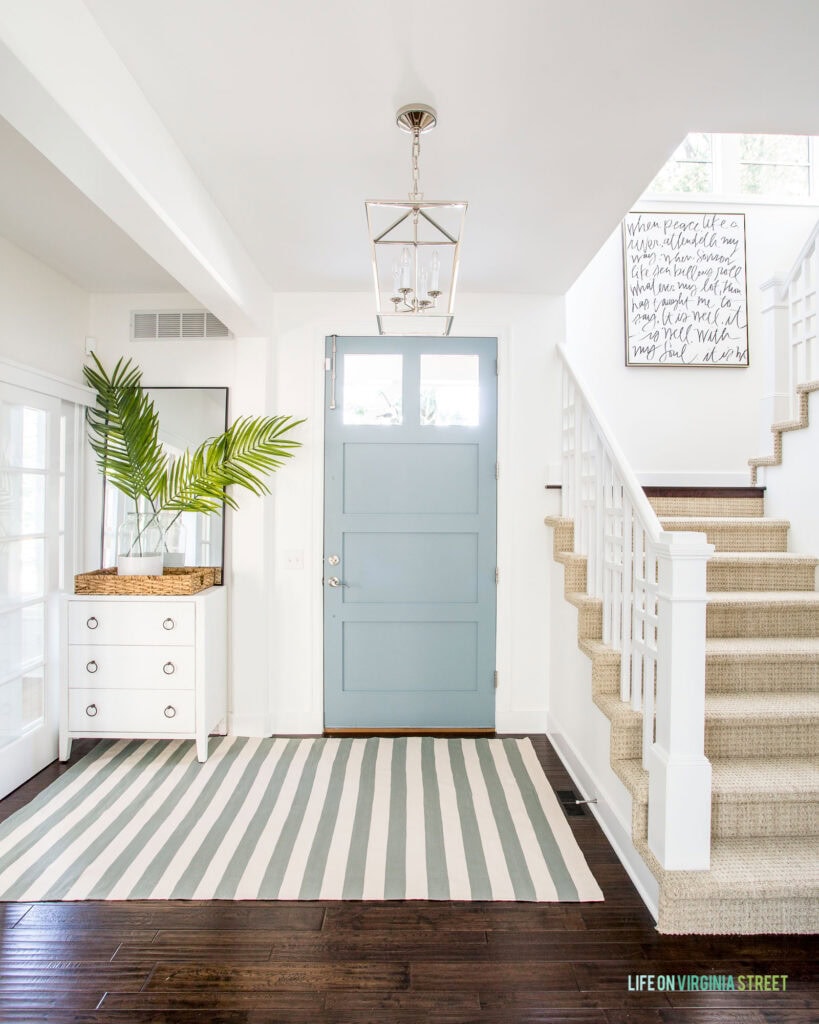
ENTRYWAY SOURCES: Faux Palm Branches | Tall Dipped Vase | White Raffia Chest | Mirror | Woven Tray | Indoor/Outdoor Striped Rug | Lantern Light Fixture | ‘It Is Well’ Art
Prior to that, the interior of our front door was painted Benjamin Moore Hale Navy (the walls were Behr Castle Path).
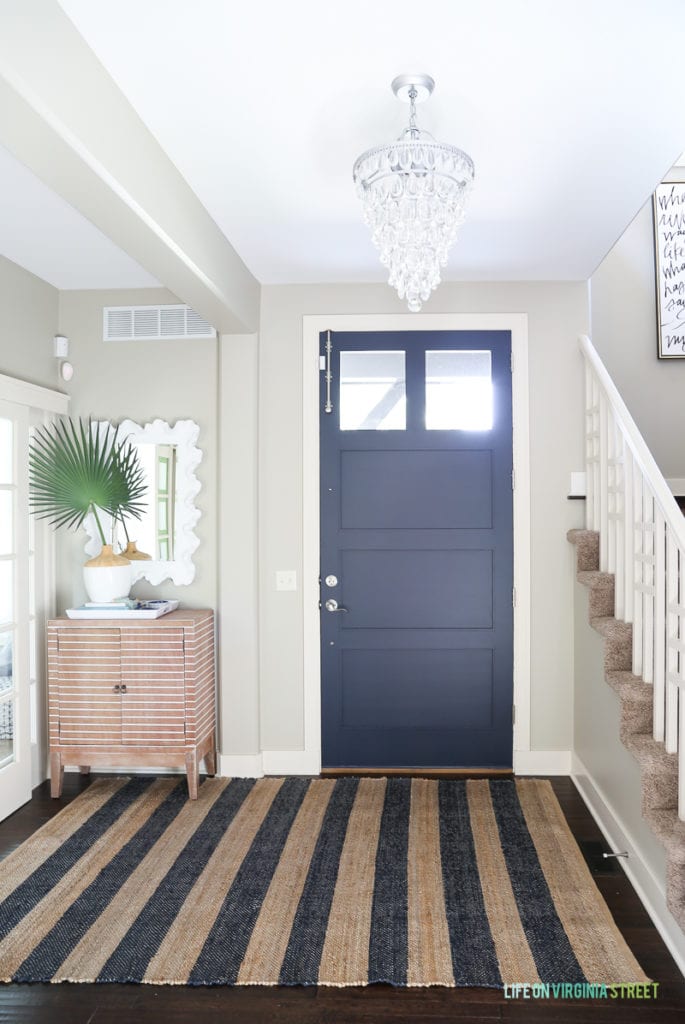
ENTRYWAY SOURCES: Striped Rug | Faux Fan Palm | Similar Tiered Chandelier | Striped Wood Cabinet | Mirror
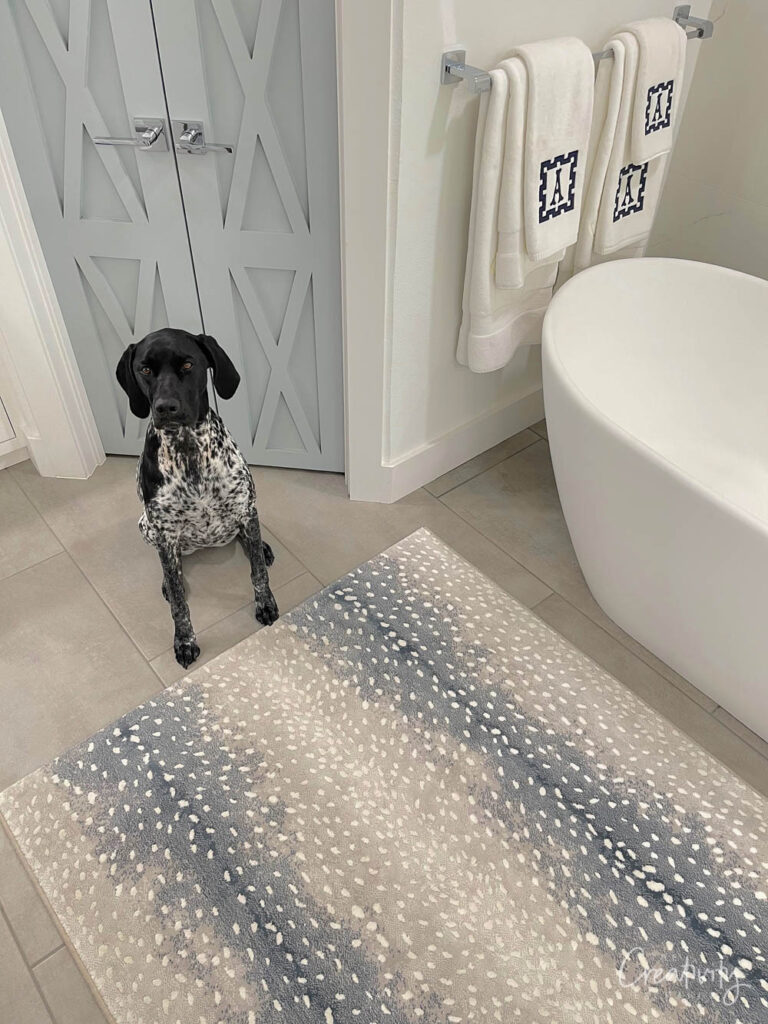
My friend Cyndy from The Creativity Exchange reached out and said Sherwin Williams Samovar Silver was her current favorite. She is a master with paint colors so I always value her opinion. It reads really gray in our new house but I can see it’s such a beautiful color and wanted to share it for those of you that may be looking for a similar option.
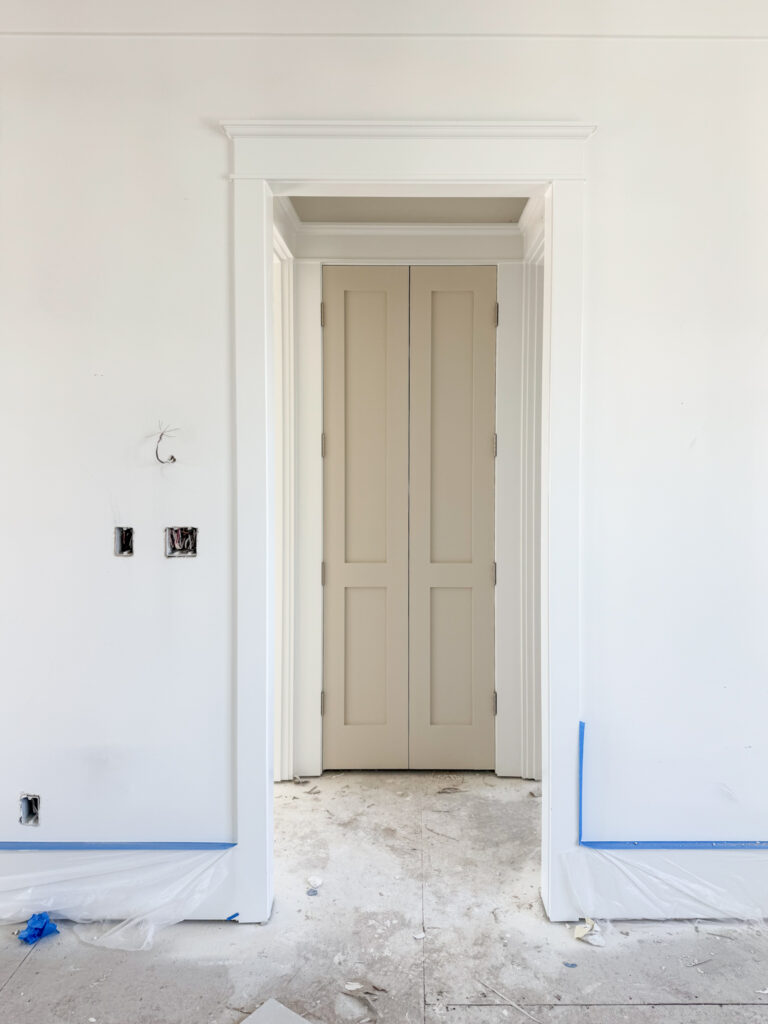
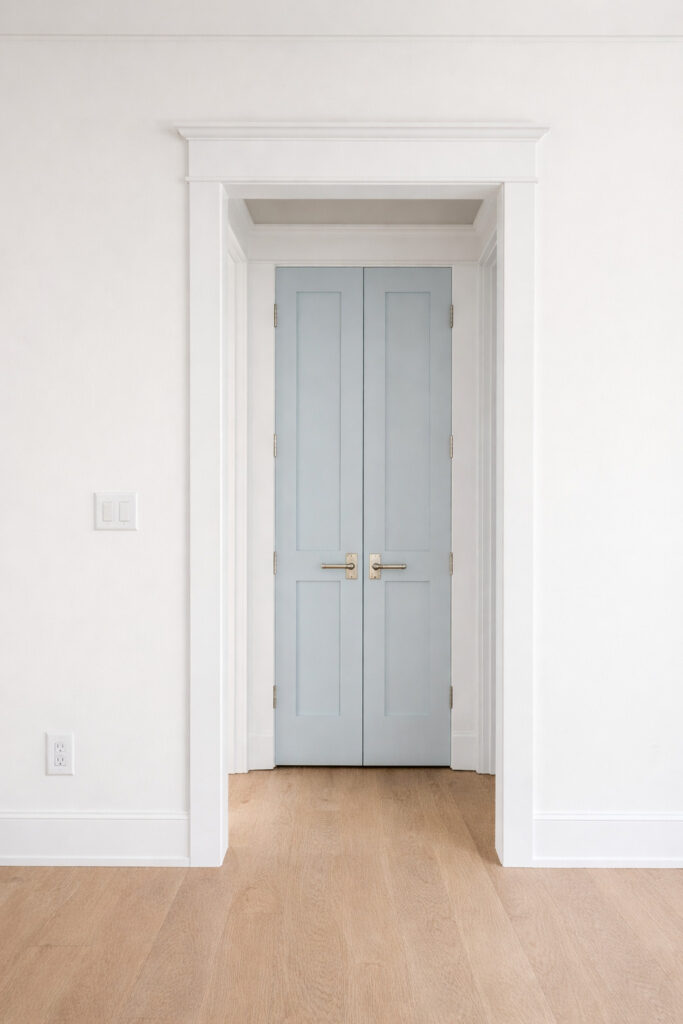
If you prefer a warmer tone, my friend Rachel painted all of their interior doors Benjamin Moore Natural Cream. They are so beautiful! The trim color here is Benjamin Moore Decorators White but the walls only had primer (she later had those painted Sherwin Williams Alabaster).
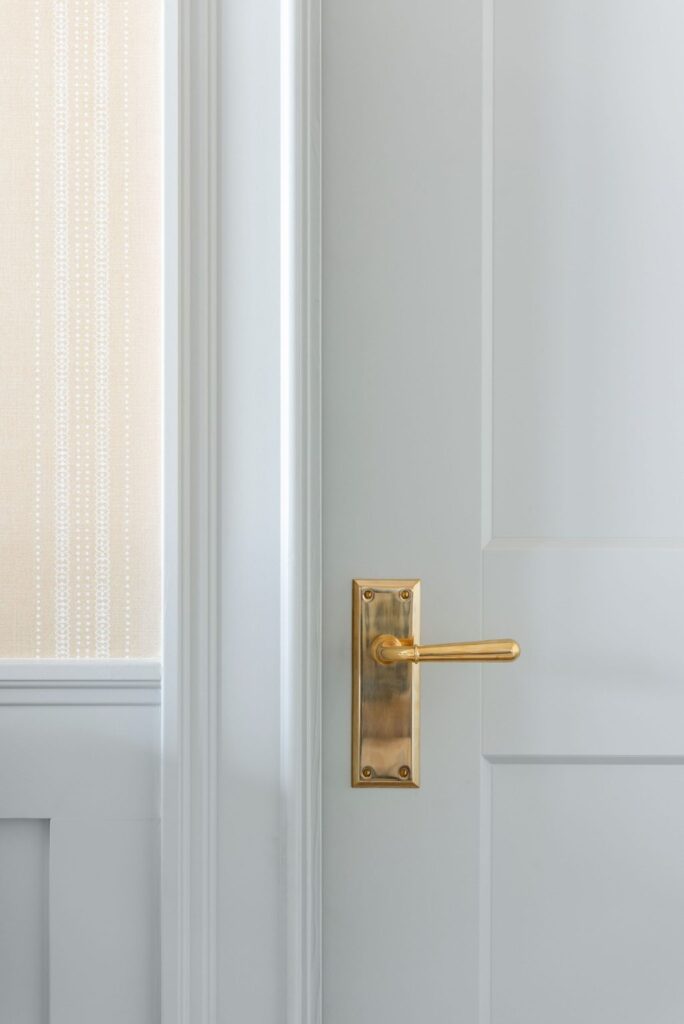
Shea McGee painted her daughter’s bedroom doors and trim Benjamin Moore Gray Owl and it looks beautiful with the brass door hardware. You can see more images of this space here.
The Color We Chose for our New Build Interior Doors
When thinking about the overall vibe I want in our new build, I immediately thought of painting our interior doors a dusty blue gray. Nothing too saturated, and definitely nothing that leaned baby blue. I tested some tried and true favorites but nothing looked quite right in the different lighting situation. So I also considered just sticking with whatever white paint we chose for our trim.
After a lot of debate (and tape and samples), we finally chose an interior door color…
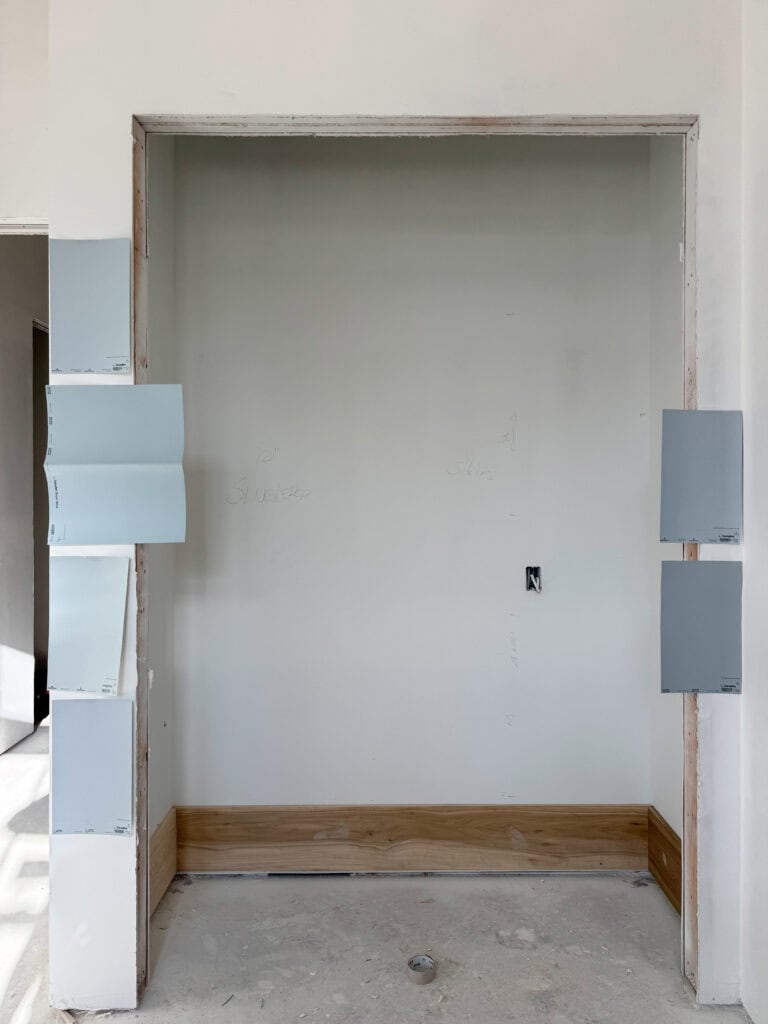
SOURCES: Benjamin Moore Silver Gray | Sherwin Williams Niebla Azul | Benjamin Moore Wales Gray | Benjamin Moore Glass Slipper | Benjamin Moore Gentle Gray | Sherwin Williams Samovar Silver
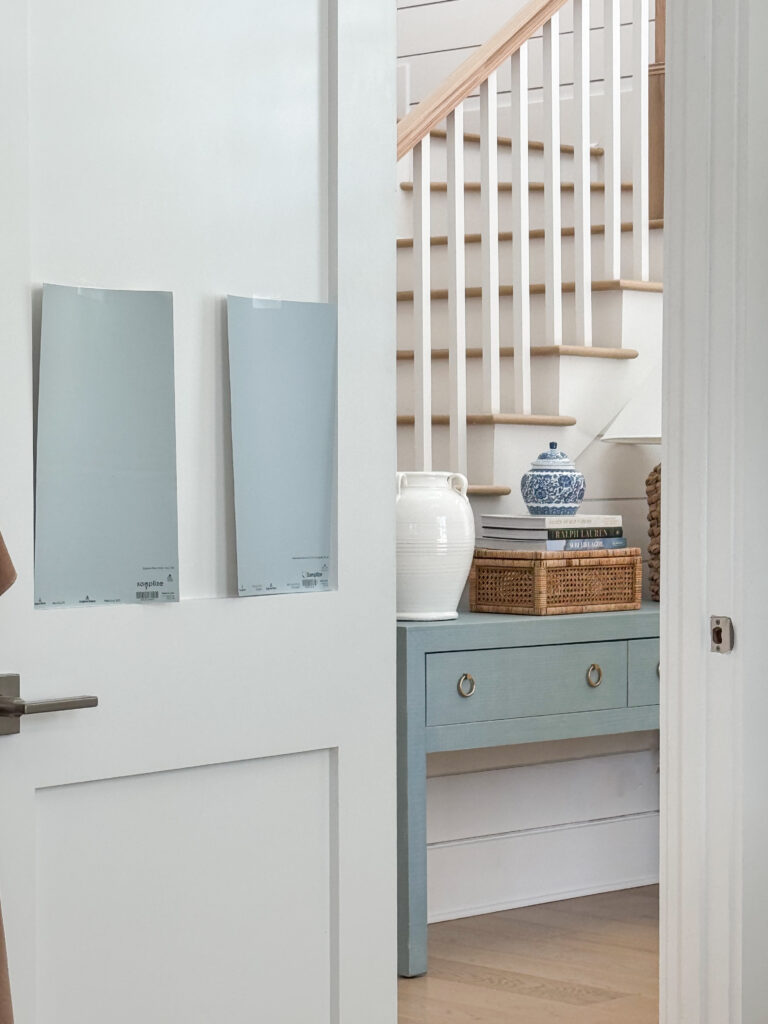
We decided to go with Benjamin Moore Silver Gray! It’s the color on the right in the image below. For reference the other color is Benjamin Moore Wales Gray and our doors and walls are currently Sherwin Williams Snowbound.
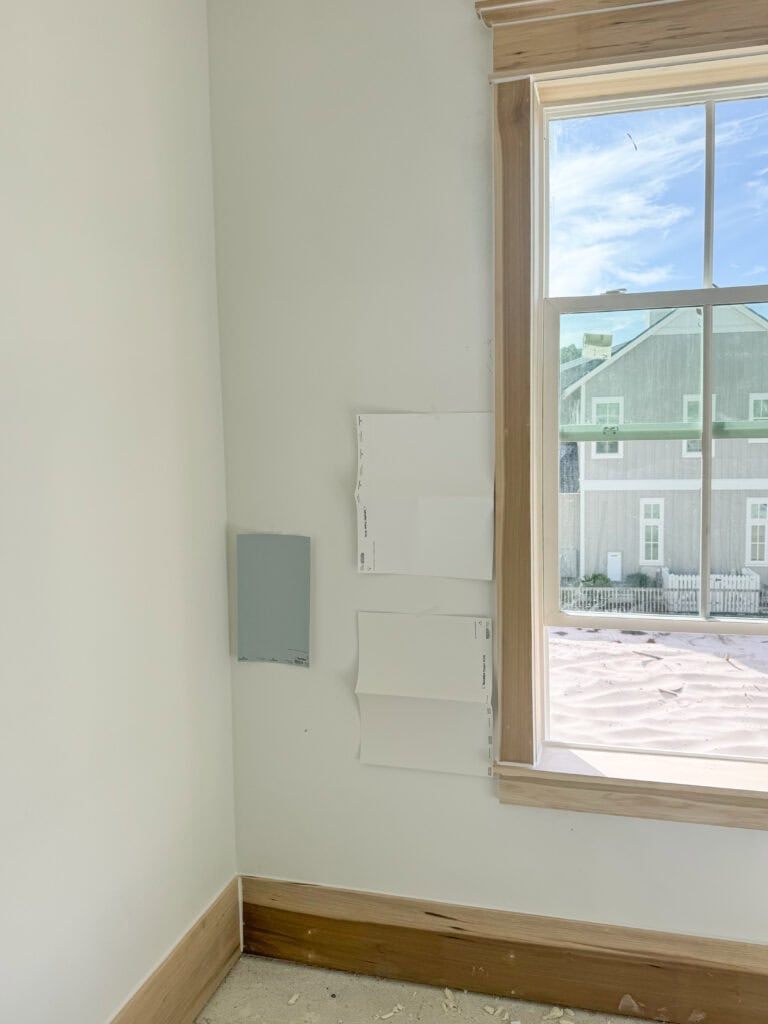
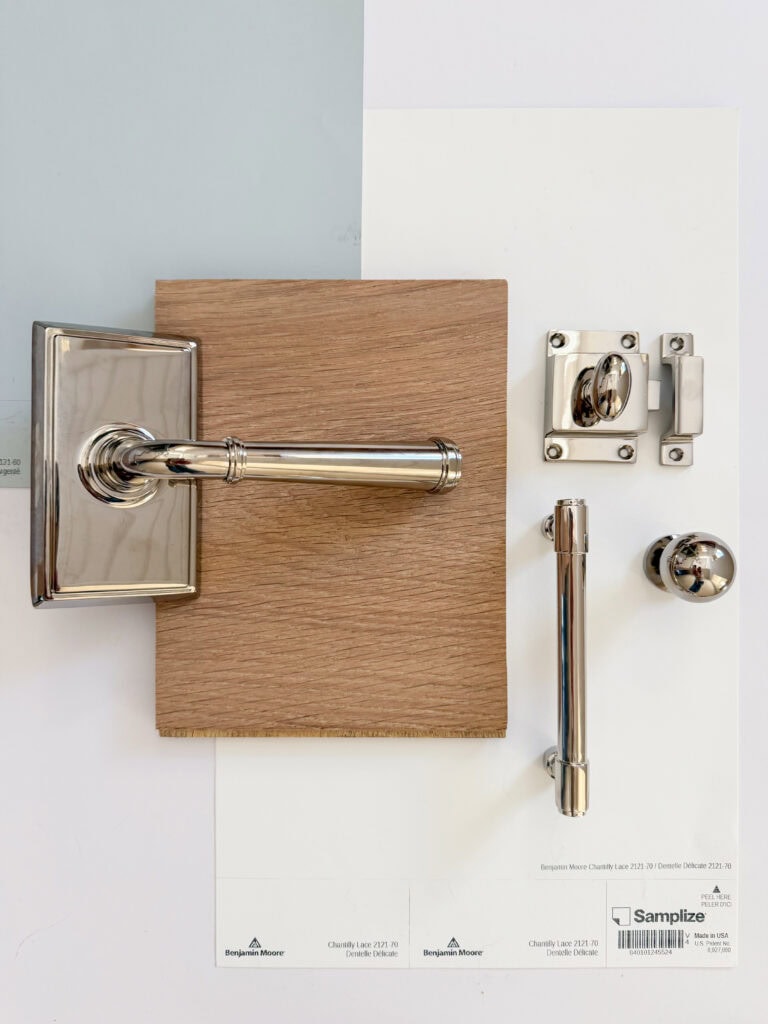
I can’t even tell you the number of times we took the samples over, at various times of day, testing in multiple locations, to confirm it’s “the one”. We’re really excited to see how it turns out! Here you can see BM Silver Gray with samples for Benjamin Moore Chantilly Lace and Sherwin Williams Snowbound (what we currently have in our home). The lighting is very different in the new house, so we opted to go with BM Chantilly Lace, as it avoided more weird undertones in certain areas throughout the house. It’s definitely a brighter white, but I think it will be the cleanest to have down the road as I paint various rooms or have them wallpapered. It makes for a great blank canvas when I decide the design direction of each room.
Here is the combo together with the door hardware (and cabinet hardware) we’re considering. We’ll likely paint a bathroom vanity or two the same color for some consistency throughout the home.
I took the picture of Rachel’s doors above and plugged it into ChatGPT with these paint colors and white oak hardwood floors like we’ll have. If you want to try something similar with your home, here is a tutorial I have for help with creating renderings like this! Here’s the result:
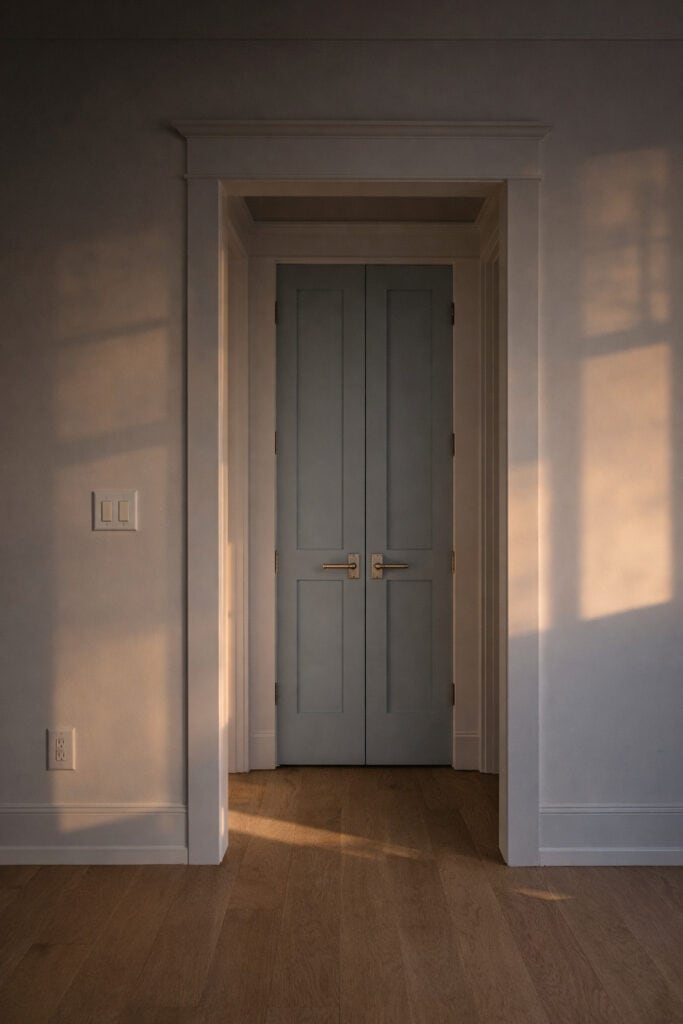
If you want to get really fancy, you can also ask ChatGPT to show you what it would look like at various times of day (just be sure to give the direction your windows face for more accuracy. Here I asked for it to show what it would look like in late afternoon with no overhead lights on.
Our interior doors are scheduled to arrive at our new build next week, so I imagine they’ll get primed and painted within a week or two after that! I’ll keep you posted on the progress!
Additional Paint Color Inspiration
If you’re looking for even more paint color inspiration, including specific paint color recommendations, be sure to check out these other posts by clicking on their titles below:
- The Best Coastal Paint Colors
- The Best Blue Gray Paint Colors
- The Best Blue Green Paint Colors
- The Best Navy Blue Paint Colors
- Benjamin Moore Hale Navy
- The Best Black Paint Colors
- The Best Brown Paint Colors
- The Best Green Paint Colors
- The Best Gray Paint Colors
- The Best Warm Gray Paint Colors
- The Best White Paint Colors for Interiors
- The Best Exterior White Paint Colors
- Whole House Paint Colors & Printable Paint Color Organizers
- How To Pick the Perfect Paint Color and My Top Five Neutral Paint Picks
- Paint Colors In Our Home (and Every Color We’ve Ever Used)
If you would like to follow along on more of my home decor, DIY, lifestyle, travel and other posts, I’d love to have you join me on any of the below channels:
I seriously considered painting my interior doors gloss black. But I have since decided it was going to affect the flow and make my home seem smaller. My main level is only 2200 square feet. I think it might work well in a larger home where the doors are further apart.
I love the color you have chosen, it will be great for a coastal vibe. Will you paint all your doors this color or just select ones while leaving others white? Also do you typically only paint the exterior of the door and leave the interior white? Thank you for sharing!
Thank you! We’ll be painting both both sides this color, and all doors in the home. The front door exterior will likely be a different color (TBD) because I’m not sure this color will work as well with our exterior paint color.
You don’t explicitly suggest this, but any thoughts on painting all doors on the second floor the same color? Seems like a popular trend. Especially black. HOWEVER, I can’t understand how this works when the doors are actually open. The actual rooms upstairs are painted blue, pink and a different blue (among others). Why would I want a black door seen in that room (since the doors are usually open, not closed). Even if the doors are green or whatever to make the hallway look good, the color still likely clashes with some if not all of the rooms. Am I crazy?
That’s a great question! So, in my husband’s office (which will be upstairs and painted BM Hale Navy – a dark navy blue) we’re paint the part that would face the common area/hallway when the door is closed the BM Silver Gray. But on his side, the back of the door will be BM Hale Navy to match the rest of the room. Granted, when the doors are open and swung into the room, you’d see the hallway color, but I think if your colors overall are cohesive, it won’t feel that disjointed! Our general color scheme is blues and neutrals so it may be a bit easier, but I think you can still make it work! I think black specifically may be a bit jarring but even a dark gray tone (if you’re set on black) could work well with other colors. I hope that helps!